SignalTel Churn Intelligence
An end-to-end churn model for a telecom: leakage-safe pipelines, honest model selection, and a production FastAPI service.
Context
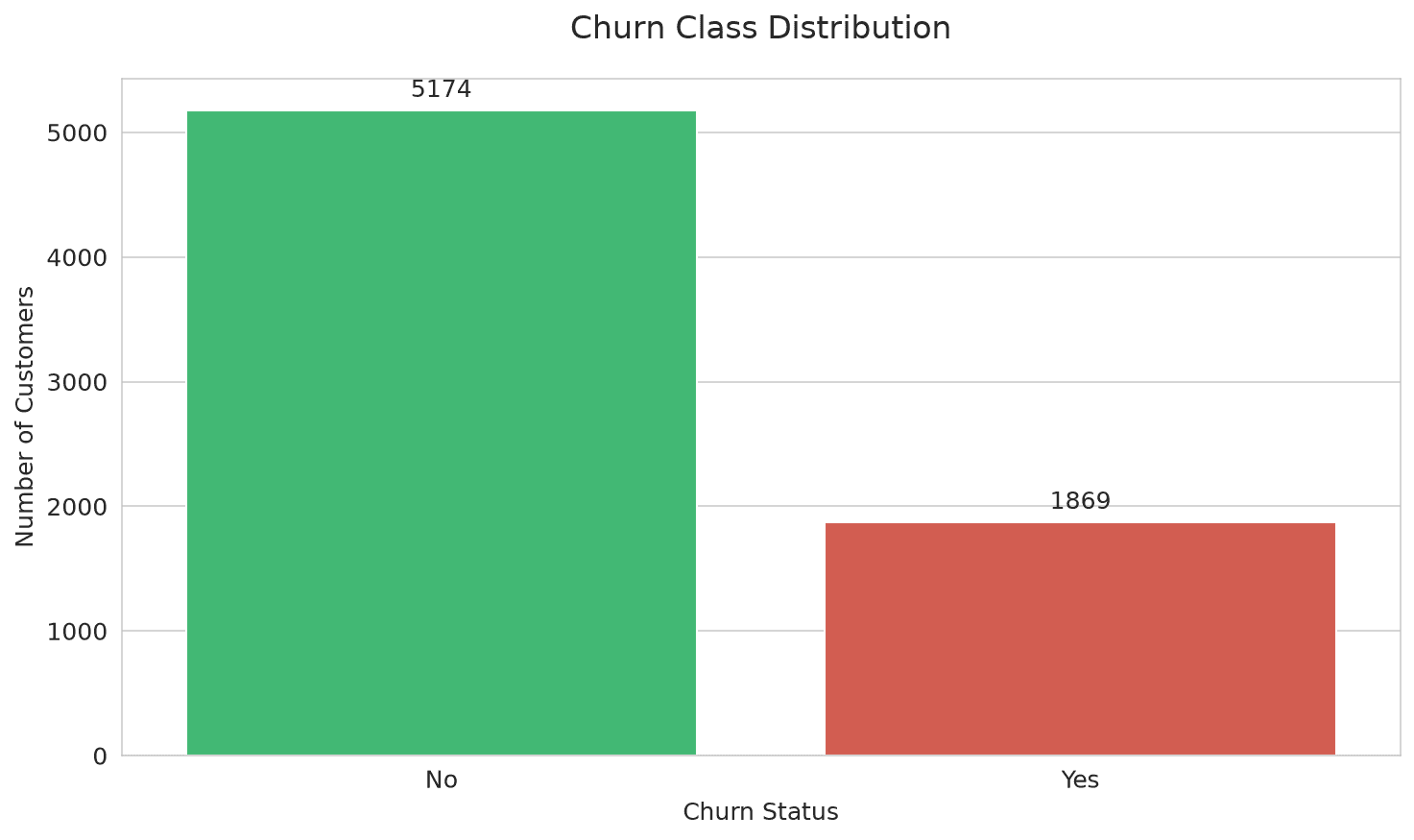
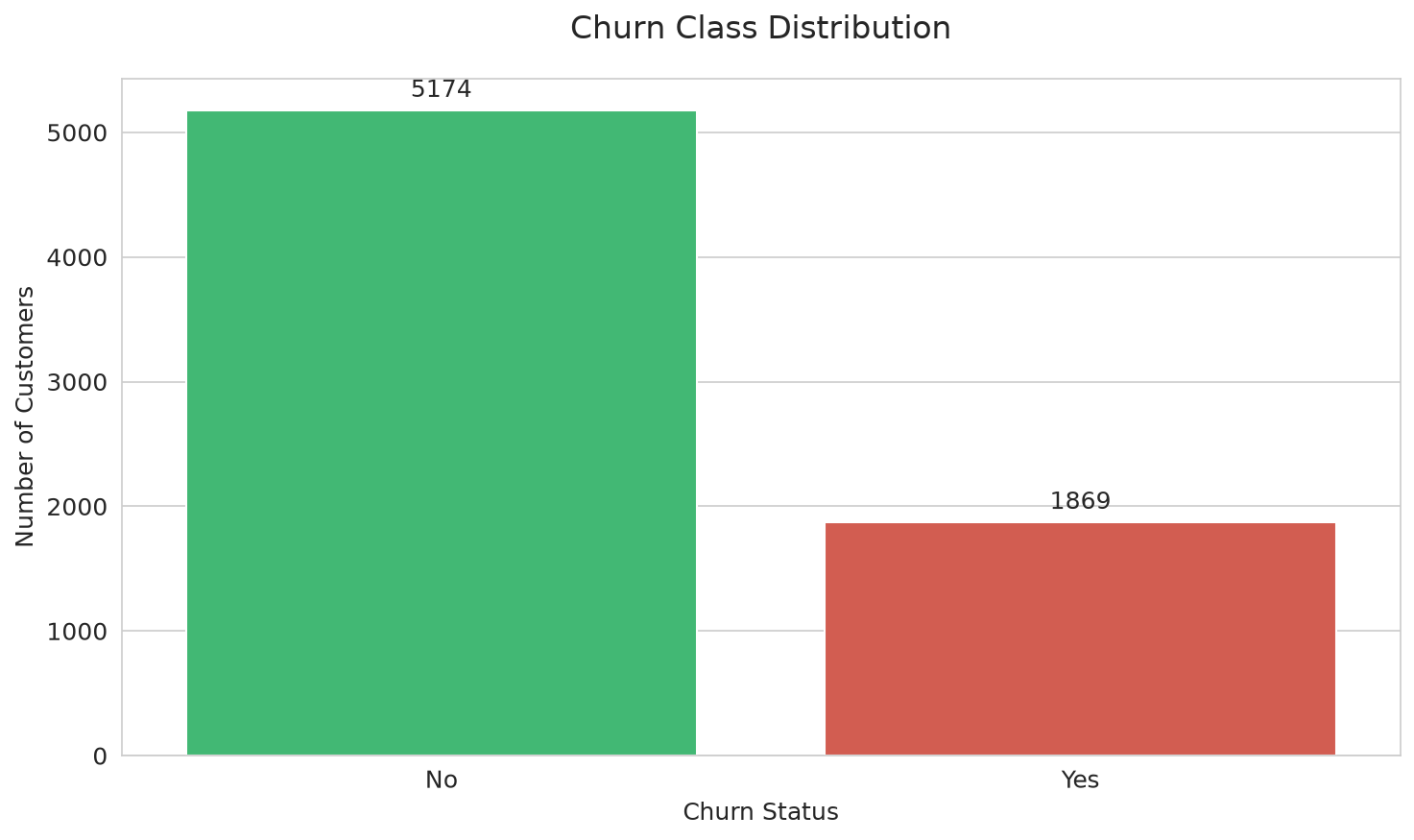
A telecommunications company wants to know which customers are about to leave. The dataset is the classic telco profile: 7,043 customers, 26.5% of whom churned, a meaningful class imbalance that shapes every decision downstream.
This project takes the problem end to end: EDA, cleaning, leakage-safe feature engineering, model selection, persistence, and a deployed REST service with a browser dashboard.
Problem
Churn modeling punishes three common shortcuts:
- Accuracy lies under imbalance. With 73.5% "no churn" rows, a model that predicts "everyone stays" scores 0.735 accuracy and is perfectly useless: it never identifies a churner.
- Leakage inflates offline scores. Any feature that encodes post-churn information (or statistics computed over the full dataset before splitting) produces beautiful cross-validation numbers that evaporate in production.
- Notebooks are not products. A model that lives only in a notebook can't be queried by the retention team, can't be regression-tested, and dies on the author's machine.
Approach & Architecture
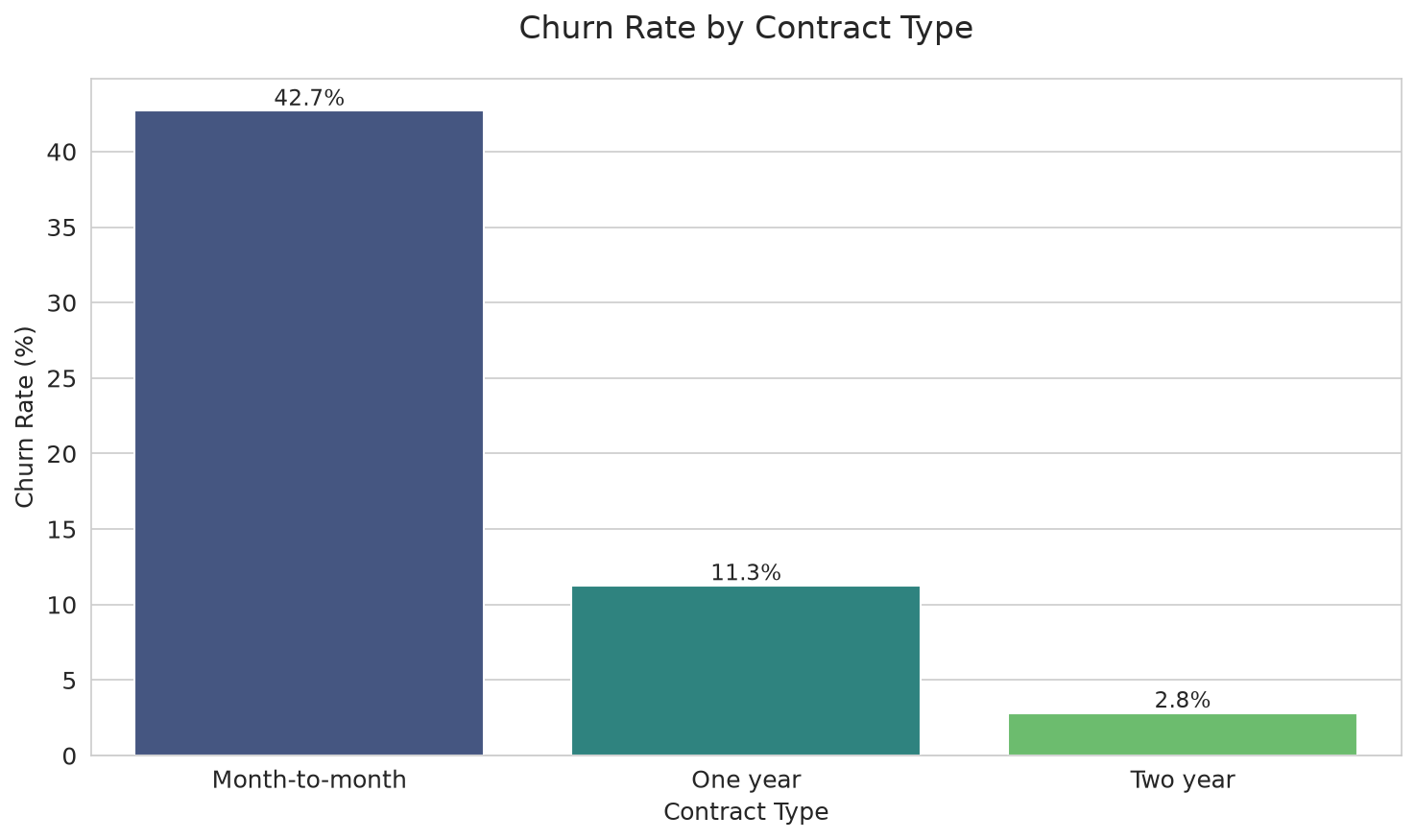
EDA first, hypotheses second. The exploration surfaced the drivers before any model was trained: customers under 10 months of tenure churn dramatically more; month-to-month contracts churn at ~42% versus ~3% for two-year contracts; fiber optic customers churn at ~42%; electronic-check payers at ~45%.
Leakage-safe pipelines. All preprocessing (scaling, encoding, imputation) lives inside scikit-learn Pipeline objects fitted on training folds only, so no statistic from validation or test data can leak into features.
Honest model selection. Three candidates were trained and compared on the same held-out test set:
| Model | Accuracy | Precision | Recall | F1 | ROC-AUC |
|---|---|---|---|---|---|
| Logistic Regression | 0.7402 | 0.5061 | 0.7769 | 0.6129 | 0.8397 |
| Random Forest | 0.7744 | 0.6007 | 0.4409 | 0.5085 | 0.8149 |
| Gradient Boosting | 0.7929 | 0.6401 | 0.4973 | 0.5598 | 0.8351 |
Gradient boosting wins on accuracy; logistic regression wins on the metric that matters. For churn intervention, a missed churner is an unrecovered customer, so recall leads, and the linear model catches 78% of churners versus 44% for the forest. Selected: logistic regression, F1 0.6129, ROC-AUC 0.8397.
Served, not shelved. The winning pipeline persists as churn_pipeline.joblib behind a FastAPI service: typed input validation, Swagger and ReDoc docs, a browser dashboard for single-customer predictions, seven pytest tests, and a Dockerfile. The whole lifecycle reruns from one directory with pip install -r requirements.txt and four commands.
Stack
- Python, scikit-learn (pipelines, Logistic Regression / Random Forest / Gradient Boosting), joblib
- FastAPI with OpenAPI documentation, pytest, Docker
- EDA scripted and reproducible (
notebooks/01_eda_analysis.py), not one-off cells
Results
- 7,021 customers cleaned and scored (one duplicate removed from 7,043); churn rate 26.5% handled explicitly through metric choice rather than ignored.
- A deployed service where the retention team's "who do we call?" question gets a probability, a recommendation, and the model's key metrics, reachable as a live demo, not a screenshot.
- A selection decision written down and defensible: recall over accuracy, with the numbers to prove why.
- Every artifact reproducible: data → EDA → training → tests → container, in order, from source.